Sitting Posture and Hand Position

Sitting Posture and Hand Position

One of the first things covered in a student’s first lesson is posture and hand position. It’s easy to gloss over these topics as a teacher because we have repeated the same lesson over and over to dozens of beginning students. I have asked myself many times, especially recently, “How important is it to keep harping on and on to a student about their improper hand position? Will they eventually grow out of it? If so, am I wasting valuable lesson time talking about and demonstrating proper hand and finger position. And why is it that some students struggle with it, and others not so much?” I continue to search and look for ways to help students with this. I am by no means an expert in beginning piano technique, nor do I have all the answers to these questions, but I do have experience in teaching a lot of beginning students. So I would like to share how I approach the topic in lessons and what has worked for some students.

Depending on what method you use, sitting position is typically covered on the first page or two. I like to demonstrate to a student proper sitting position by sitting next to them and showing them how to sit with both feet flat on the floor (if they are tall enough to do so). If a student’s feet cannot reach the floor I have them sit farther back on the bench and crisscross their ankles. I have seen some teachers create a foot stool using books or boxes for a student to be able to put their feet on. Adjustable foot stool’s are available for purchase, which may be worth the investment if you teach a lot of preschool students.

Student’s hands, wrists and forearms should all be horizontally level when sitting on the piano bench with hands placed on the keys. (Don’t forget to check for relaxed shoulders. Some students tend to tense up.) Sitting height may need to be adjusted in order to reach the appropriate hand and arm position. An adjustable bench is desirable because then it is easy to correct a students height and position, but again one could use other means to achieve the correct height.

I teach my students to check for proper sitting placement from the bench to the keys. I have them make fists and stretch out their arms to touch the fallboard on the piano (or the bottom of the music rack if they have a keyboard). If their arms do not have to stretch out completely to touch the fallboard, then they are sitting too close to the keys. If they must lean forward to reach the fallboard, then they are sitting too far back. The student can then adjust their position as necessary for them to have appropriate elbow room. Students may have to be instructed on proper sitting position for the first several lessons. Typically, once a student gets the feel for the proper sitting position they will learn to adjust their position automatically.

Proper sitting position is important to proper hand and finger position. Ideally a student should maintain a hand position that includes a c-shape between the first and second fingers of the hand, a strong knuckle bridge, and rounded finger tips (no collapsing finger joints). I demonstrate good hand position by first showing students myself. I also have them place their hands over their kneecap and then gently lift their hands up onto the keys maintaining the hands shape. Sometimes I have students turn their hands up and imagine that they are holding a small ball. Then I ask them to turn their hand over without dropping the ball. I find that some imagery like this helps the student understand how their hand should look and feel.

It is not uncommon for a student to have difficulty maintaining a good finger and hand position once they actually start to press the keys. This is due to weak finger and hand muscles. I tell my students that their hands and fingers need to go to the gym! I ask the student to do finger O’s, gently pressing the thumb against each finger without letting the joints collapse. I suggest different activities for students, such as squeezing a stress ball, squeezing a hole punch, using scissors (under parental guidance of course), or playing with small lego pieces. All activities which I fear have become increasingly less with young children. Fine motor skills are super important, and not just for playing piano purposes.

As a teacher it can be frustrating for a student to come week after week, and barely be able to press the keys independently. It takes time, a student may be half way through the primer method book before they start to improve in this area. Some students will need extra technique practice. I sometimes have a student focus on playing just one finger with the proper position. (Usually because they are not maintaining the correct finger position is the reason they are struggling to play.) I have them repeat that finger several times, and then repeat the process with another finger.

Sometimes even older students who have been playing for a while have the problem of playing with collapsed finger joints. I have struggled with how much of the lesson time do I want to use up on fixing this? It needs to be addressed, and it should be brought to the student’s attention. As a teacher I don’t want students developing a bad habit that will affect their ability to play more advanced material later on. It’s a matter of making the student aware and asking them to be aware when they are practicing at home. In my opinion it comes down to balance. Addressing the issue and still continuing to pursue other areas of the music that need to be worked on so the student (and you as a teacher) do not become frustrated.

I would love to hear ideas and ways other teachers handle this with their students!

Piano Method Books, Part 2

Piano Method Books, Part 2

Last week I did a quick overview of some of the mainstream beginning piano method books. Keep in mind that I just covered the beginner books for approximately ages 6-9. There are other beginner books for the younger beginner, the older beginners (10-12), teenage and adult beginners. (This may be covered in another post.)

I have had the opportunity to use almost all of these method books at some time or another. I’ve also been intrigued to try the couple I have not during the creation of these posts. A lot of teachers have a method they lean towards, myself included, but that doesn’t mean the other methods can’t be taught effectively. It’s just a matter of preference and success with usage. If you were to ask me how I go about choosing a method, I would say it depends on the student. If a student has taken lessons previously, and comes to me with a particular book, I try to keep that student in whatever method book they are using unless that method proves unsuitable for the student.

I want to do a quick over view of the beginner book for each method series. This can help you as a teacher decide which method to use. An introductory lesson is preferential in deciding the maturity and overall readiness of a student, after which the teacher can decide which method is appropriate. A particular method may be more satisfactory for a student than another depending upon how quickly the method progresses.

The criteria that I am going to assess for each method includes;

Pre-staff reading

What range of the piano is primarily used

Rhythm

Staff Introduction

Note Reading/Rate of notes introduced

Hand Position vs Multi finger

Dynamics

Articulation

The easiest way for me to do this was in excel sheet format. Otherwise this post would be very lengthy. Hopefully the breakdown will help access how each method approaches learning. I highly recommend if you are studying this to set down with a hard copy of each of these method books.

https://1drv.ms/x/c/7b59a112d75bce0f/EeujHUCuOXZKmQHfgqq3WBwBmEoIXBccT4pBty8ERPc9Zw?e=sbM5RH

Piano Method Books, Part 1

Piano Method Books, Part 1

There are quite a lot of piano methods out there. (I am going to show the back of the piano method books because most of them give information as to all the books in the series, with the different levels etc. I am also going to include links when possible for your own benefit.) Some of the more popular piano methods include:

Alfred’s Basic Piano Library

The graph on the back of this book is useful in understanding the different levels of beginning students, and how many books are in each level. The first publication date for this series was in 1981, but the series has added many different books and editions since that time. https://www.alfred.com/alfreds-basic-piano-library/?srsltid=AfmBOooKbGbj9fEdEeyakK7c3XykmzX547-z4JCd5UITMtAgSDF-KWP6 Alfred has many piano instruction books. From Little Mozarts to the All In One Adult Books.

Alfred Premier Piano Course

This is another more recent piano method from Alfred being first published on 2005. Different levels and editions have been released since that time. This series begins with Book 1A and goes through level six. There is also a significant listing of supplementary materials. https://www.alfred.com/premier-piano-course/?srsltid=AfmBOoqVnprdsEHQ4qFN3BVnlqu5ToDwuBHjV0rQC6IjUjDI4zpky7lW

Bastien Piano Basics

In my opinion this series is for beginners who are older, or who already have a musical background. It was originally published in 1985. While there may have been some updates done since then it is largely the same. There is also a fairly good listing of supplementary materials. https://kjos.com/piano/methods/bastien-piano-basics.html

The Music Tree

This Method Book series was written by Frances Clark, Louise Goss, and Sam Holland. They are considered pillars of pedagogy in the piano teaching world. This series was first published in 1973, but revisions and new editions have been published the latest being in 2000.

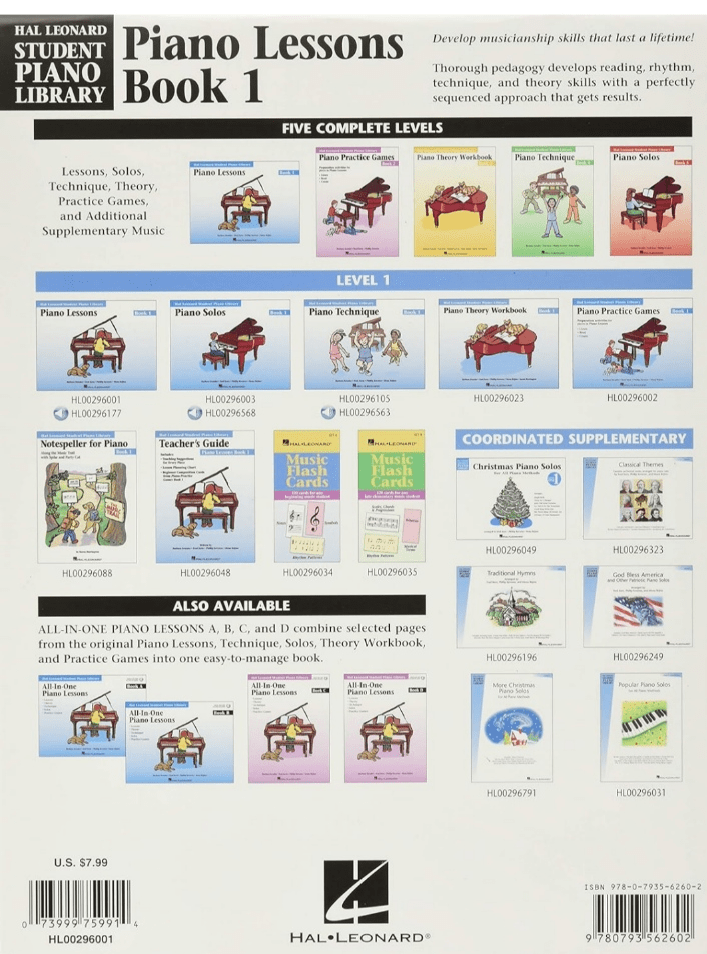
Hal Leonard Student Piano Library

Hal Leonard has a long history of educational materials dating back to the 1950s, but I could not track when its modern piano method series was published. Hal Leonard has an extensive catalogue of coordinated supplementary materials. This includes their showcase solos which are included in the National Federation Of Music Clubs selections. https://www.halleonard.com/hlspl/index.jsp

Helen Marlais’ Succeeding at the Piano

This is a fairly new piano method, being first published in 2010 (However, I feel like it may have been published a few years before that?) The second edition of the method was published in 2023. The back of the book is not very helpful in this case. The series goes through grade 5. However there is a link that I would like to include that has a correlation chart for the method book series. It’s extensive and can be a bit overwhelming. It’s hard not to get carried away with all the repertoire possibilities, but one has to keep in mind the time and abilities of the student. https://helenmarlais.com/catalogs/pianist-curriculum-correlation-chart/

Faber Piano Adventures

Piano Adventures was first published in 1996 by Nancy and Randall Faber. The series has a second edition that was published in 2011. The method goes through level 5. This piano method also has large amounts of supplementary materials. This link takes you to the faber site that has all six of their piano libraries listed. This includes their methods and supplementary repertoire. https://pianoadventures.com/piano-books/

This is a simple listing and overview of some different piano methods of my choosing. I would like to go into more detail about the methods from a pedagogical standpoint. I am considering the best, simplest way to do this so it doesn’t turn into a book!

What Is A Good Age To Start Piano Lessons?

What Is A Good Age To Start Piano Lessons?

I am often asked the question, “What is a good age to start piano lessons?”. My answer is simply this. It depends on the individual student. Every person is different, and we all develop and mature at our own pace. This is why I recommend to parents to do a trial period, or at least a trial lesson so the teacher can observe and asses whether or not a student is ready to begin taking lessons.

As a teacher here are some things I look for when having an introductory lesson with a student.

Can the student sit still for a thirty minute period? (at least without too many wiggles)

Can they focus, listen, and follow instruction during the lesson time?

Can they verbally communicate with you?

If the student is of reading age (usually 6+), can they read?

Does the student have any special needs that you should be aware of? If so, Am I suited as a teacher to handle their specific needs, or should I refer them to someone who specializes in that area?

I have had some students who are ready to begin piano lessons at age 4. They are able to sit still, they can focus, identify patterns, and they are able to press the keys with some finger independence. Students of this age do very well with a slow progressing pre-school method, and the assistance of a parent or guardian.

Some teachers prefer to wait until students are of school age (6-9), because students of this age range are able to read and can mostly handle their assignments on their own. However, after being the mom of four kids, I would very strongly suggest parental involvement! Kids just don’t remember certain details that we as grown ups do. Plus, they just need that extra push to practice. Students want piano to be fun, but it’s only fun after the work has been put into it. So it’s a cycle, and the cycle is broken if the student goes without practicing. (But the topic of practicing probably needs to be a separate post!)

I access older beginners as age 10+. While these students don’t have the advantage of already having the technique built up to play, they are a fun age to teach! They learn concepts faster, and are generally more self motivated.

I often have people ask me how old is too old to learn to play piano? I like to tell them you are never to old to learn! I do believe this is true. I have had a lot of success in teaching my adult students to play. However, one must keep in mind their potential and their purpose for learning. Adult students usually want to learn for at least one of a few different reasons. They always wanted to learn when they were a kid. So they just want to learn for their own satisfaction. They want to assist in accompanying either at church or a community choir/band. Or they learned to play as a youth, and wish to pick it back up again.